MONOCULTURE – ARTEFACTS
Ensemble
As with a number of exhibitions M HKA has organised in recent years exploring questions we feel to be relevant for society and culture at large, Monoculture – A Recent History is trans-disciplinary. Along with its core focus on visual art, we also include various historical artefacts into a dialogue. Most of the artefacts, including rare first-edition publications and paraphernalia, were acquired by the museum specifically for the exhibition. Consequently, the artefacts were preserved as part of the museum archive, with the intention of providing open access for researchers.
M HKA in no way endorses the extremist ideologies, historical acts of intolerance and sensitive images or texts that were shown in the exhibition. As a museum for art and visual culture, we consider it important to use and contextualise this material, bringing it in dialogue with contemporary art and discourse, in order to ask relevant questions about society and culture at large.

Items
View all-
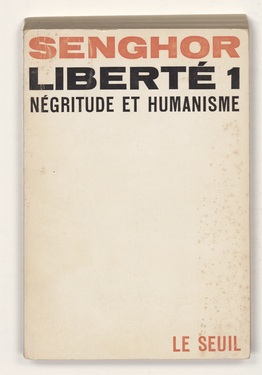
L. S. Senghor, "Liberté ...
L. S. Senghor, "Liberté 1: Négritude et humanisme", 1964. Book, 20,5 x 14 x 2,5 cm.
-

V. Lalayants and G. Arkad...
V. Lalayants and G. Arkadiev, "Set van postkaarten gebaseerd op de animatiefilm Чудесница (Chudesnitsa)", 1959. Postcard.
-
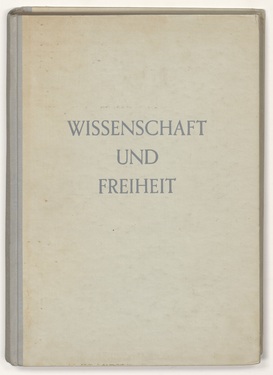
Wissenschaft und Freiheit
Wissenschaft und Freiheit, 1945. Book, paper, ink.
-
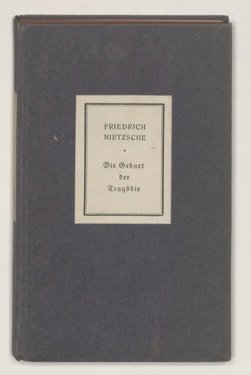
Friedrich Nietzsche, Die ...
Friederich Nietzsche, Friedrich Nietzsche, Die Geburt der Tragödie aus dem Geiste der Musik, 1930. Book, 15,5 x 10,3 cm.
Actors
View all-

Joseph Beuys
Joseph Beuys: controversial war artist German artist Joseph Heinrich Beuys (Krefeld, 1921 - Düsseldorf, 1986) grew up as a child with unu
-

Matti Braun
Matti Braun is interested in the relationships between different cultures such as the connection between early 20th Century Indian art histor
Ensembles
View all-

MONOCULTURE – Ronald Reagan
Ronald Wilson Reagan (1911-2004) was a Hollywood actor and an American politician who served as the 40th President of the United States from
-
MONOCULTURE – Apartheid
South Africa was already experiencing racial segregation during British colonial rule. 'Apartheid' refers to the government policy of segrega
-
MONOCULTURE – Congress Fo...
The Congress for Cultural Freedom (CCF) was an organisation, founded in 1950 at a conference that gathered a group of anti-communist intellec
-

MONOCULTURE – Unipolarity
With The End of History and the Last Man Francis Fukuyama proclaims the victory of Western democracy over communism and all other ideologies.